

Clinic Visit Versus House Call - Which Is Best?

A stomach illness that starts at 2 a.m., a painful UTI before a flight, or a child with a fever can make one decision feel much bigger than it should: clinic visit versus house call. For English-speaking visitors and residents in Medellín, the right choice is usually less about medical quality and more about what will get you assessed, treated, and feeling secure with the least added stress.
Both options can provide attentive, bilingual care for many non-life-threatening concerns. The practical difference is the setting, the level of diagnostic support you may need, and whether getting out the door feels manageable. Knowing how to choose can save valuable time when you are already unwell.
Clinic Visit Versus House Call: The Practical Difference
An urgent care clinic visit is often the more efficient option when you need an examination plus access to testing, imaging, or treatment that is easier to provide in a clinical setting. You come to a private medical space, meet with a clinician, and can often move directly into the next appropriate step without coordinating care across several locations.
A house call brings the clinician to your hotel, apartment, or workplace. It is designed for patients who need prompt medical guidance but may be too sick, uncomfortable, busy, or concerned about privacy to travel. For many travelers, especially those dealing with food poisoning, dehydration, respiratory symptoms, or a hangover that has become more serious than expected, remaining in a familiar room can make the entire experience feel calmer.
Neither format is automatically better. The best choice depends on what is happening now, what care may be needed after the consultation, and how safely you can travel.
When a Clinic Visit Makes More Sense
A clinic visit is usually the strongest choice when your symptoms could require on-site diagnostics or procedures. If you have a possible fracture, a significant cut, severe urinary symptoms, persistent abdominal pain, a skin infection, or an illness that has not improved after a few days, being near laboratory testing and imaging can speed up decision-making.
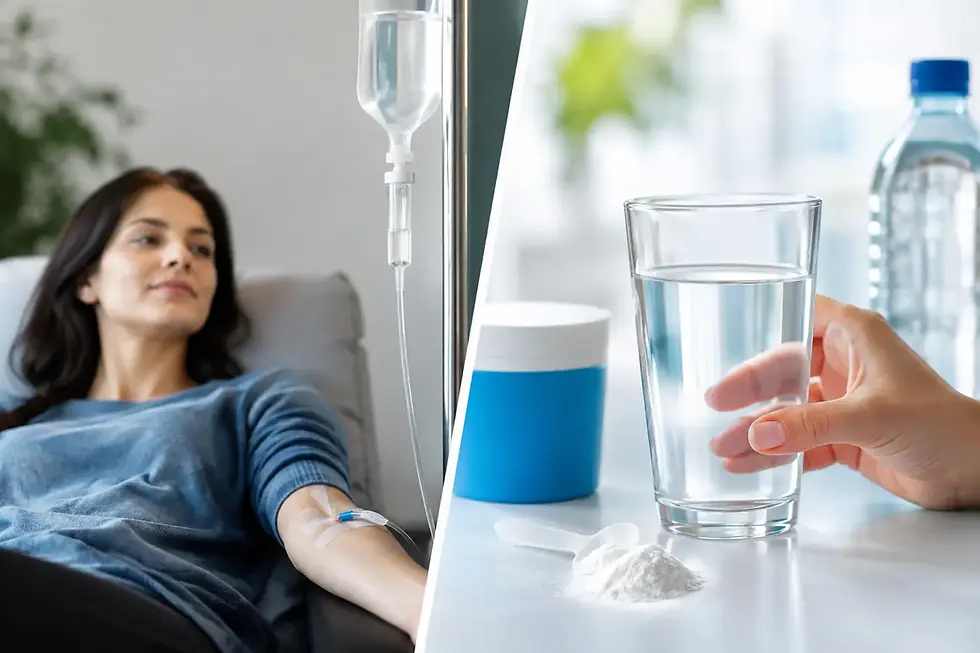
It is also useful when you need several services coordinated in one appointment. A clinician may recommend blood work, urine testing, an STI panel, an ultrasound, an X-ray, IV therapy, or a prescription. While a doctor can assess many conditions at home, a clinic is generally better positioned for a more complete workup right away.
For patients who feel well enough to leave their accommodation, the clinic environment can provide a sense of certainty. You have the equipment, clinical team, and treatment options close at hand. This may be especially reassuring if you are new to Medellín and unsure how to navigate a pharmacy, laboratory, or hospital in Spanish.
A clinic appointment can also be preferable for discreet concerns such as sexual health, gynecology, mental health support, or follow-up care. Privacy is not only about being at home. Some patients feel more comfortable discussing sensitive issues in a neutral, professional setting away from roommates, family members, or colleagues.
Consider travel time honestly
The main trade-off is simple: you need to get there. If you are staying in El Poblado, Envigado, or Laureles and can travel comfortably, a clinic visit may be quick and straightforward. But if nausea, dizziness, weakness, mobility limitations, or anxiety make a ride feel difficult, forcing yourself to travel can add unnecessary strain.
You do not need to prove that you are "sick enough" for a house call. Comfort and safety are valid reasons to choose care at home.
When a House Call Is the Better Choice
A house call is ideal when leaving your accommodation would be difficult or when you want medical care without exposing yourself to a crowded waiting room. This can be particularly valuable for travelers who are alone, parents caring for a sick child, professionals who cannot easily step away from a residence or office, and patients who simply need a quiet, direct assessment.
Gastrointestinal illness is a common example. Diarrhea, vomiting, dehydration, and stomach cramps do not pair well with a car ride across the city. A clinician can evaluate your symptoms where you are, assess hydration and warning signs, recommend treatment, provide prescriptions when appropriate, and determine whether you need more advanced testing or hospital-level care.
House calls can also be a thoughtful option for respiratory symptoms. If you have a fever, sore throat, cough, or flu-like illness, staying in your room may be more comfortable for you and more considerate of others. The same applies to minor injuries, rashes, allergic reactions without severe breathing symptoms, urinary concerns, and many routine acute issues.
For expats and digital nomads, the value is often logistical as much as medical. You can explain your symptoms in English, ask questions at your own pace, and receive a clear plan without trying to locate an unfamiliar clinic while unwell. That extra calm matters when you are far from your usual support system.
What a house call cannot replace
Home care has limits, and a responsible clinician will be direct about them. If your symptoms suggest you need imaging, extensive laboratory work, a procedure, specialist evaluation, or emergency monitoring, the next step may be a clinic or hospital transfer.
A house call should not delay emergency care. Call emergency services or go to an emergency department immediately for chest pain, difficulty breathing, stroke-like symptoms, fainting, confusion, uncontrolled bleeding, seizures, severe allergic reactions, major trauma, or thoughts of harming yourself or someone else. The same applies if a child is struggling to breathe, is unusually difficult to wake, or has other alarming symptoms.
Privacy, Speed, and the Emotional Side of Care
Medical decisions are rarely only clinical. You may be embarrassed about an STI concern, exhausted after a long flight, worried about a child, or anxious because symptoms feel unfamiliar in another country. A good care model accounts for that emotional reality.
At home, privacy can mean not having to explain yourself to a driver, sit in a waiting room, or leave your hotel while you feel visibly ill. You control the setting, and the clinician can see practical details that may help, such as your hydration supplies, medications, or the way symptoms are affecting your ability to rest.
At a clinic, privacy can mean focused time in a dedicated space with stronger diagnostic capability nearby. You are removed from the distractions of your room or work environment, and it may be easier to complete testing, treatment, and follow-up planning during one visit.
Speed depends on the situation. A house call may be fastest when travel is the obstacle. A clinic visit may be fastest when you are likely to need tests or IV treatment. Instead of asking, "Which option is more convenient in general?" ask, "What will keep me from getting the care I need today?"
A Simple Way to Decide
Choose a clinic visit if you can travel safely and suspect you may need testing, imaging, a procedure, or several services in one place. Choose a house call if you are too uncomfortable to travel, need care in a private setting, are looking after a sick child, or want an assessment before deciding whether further care is necessary.
If you are unsure, describe your symptoms clearly when requesting care. Mention when they started, whether they are getting worse, any fever or pain level, relevant medical conditions, current medications, allergies, pregnancy possibility, and recent travel or food exposure. This helps the care team guide you toward the safest format rather than simply the most convenient one.
Equilibrium Urgent Care offers bilingual urgent care options designed to remove the uncertainty from this decision. Whether you are seen at the clinic or where you are staying, the goal is the same: clear communication, careful medical judgment, and a plan you can understand.
When you are sick away from home, the right setting is the one that helps you get care without adding confusion. Trust your symptoms, be honest about your ability to travel, and choose the option that lets you feel supported from the first conversation.


Comentarios