
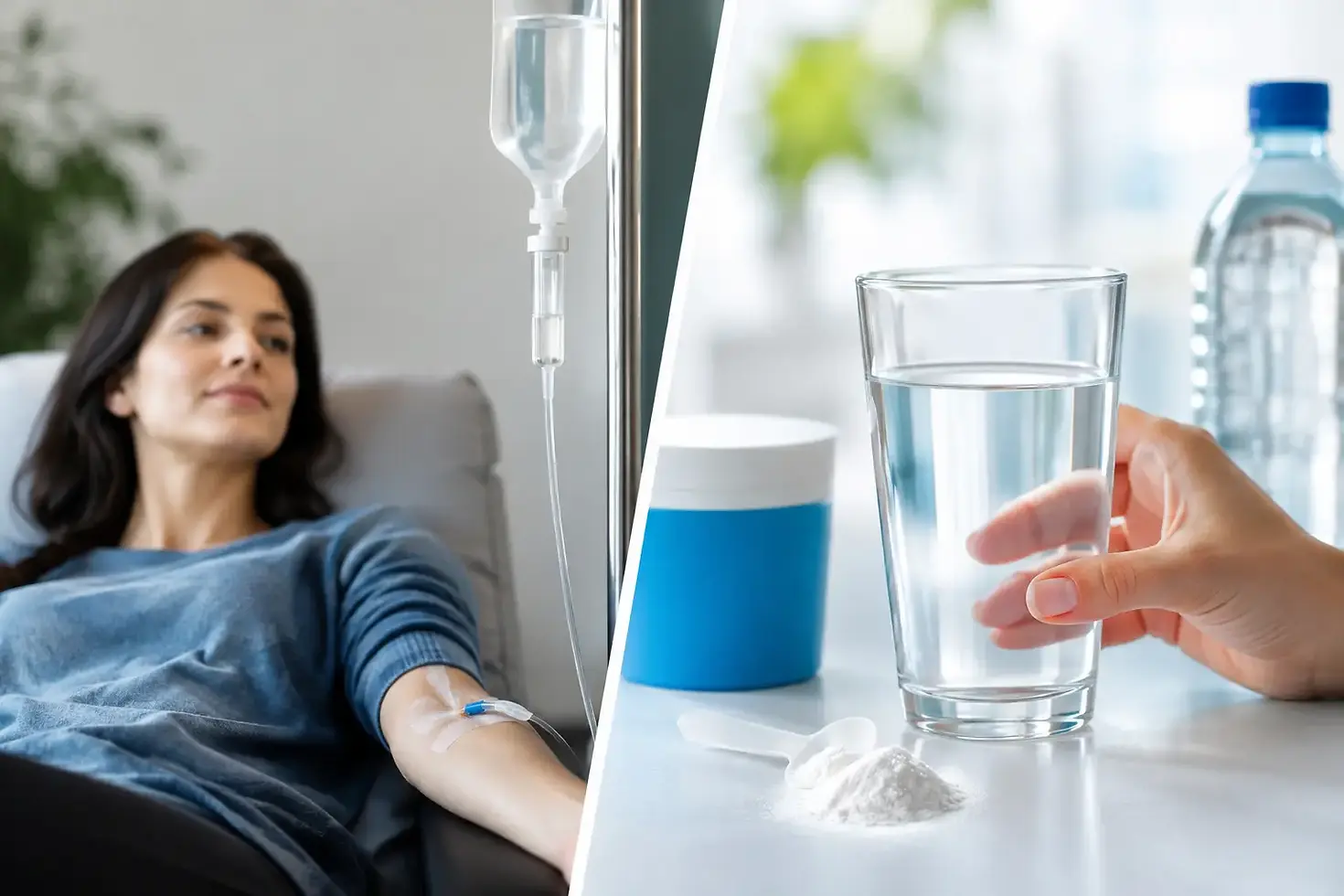
IV Therapy Versus Oral Rehydration: Which Is Best?

A day of traveler’s diarrhea, repeated vomiting, a high fever, or too much time in Medellín’s sun can leave you feeling weak fast. When you are far from home, the question is rarely just how to feel better. It is whether you can safely manage symptoms where you are or need medical support. IV therapy versus oral rehydration is not a competition with one universal winner. The right choice depends on how dehydrated you are, whether you can keep fluids down, and what is causing the fluid loss.
For many mild cases, drinking the right fluids is effective, affordable, and appropriate. For more significant dehydration or persistent symptoms, intravenous fluids may help restore hydration more reliably while a clinician evaluates the underlying problem. Knowing the difference can prevent both unnecessary treatment and a delayed medical visit.
What dehydration actually does to the body
Dehydration happens when the body loses more fluid and electrolytes than it takes in. Water matters, but so do electrolytes such as sodium, potassium, and chloride. They help regulate nerve signals, muscle function, blood pressure, and fluid balance.
Diarrhea, vomiting, fever, intense exercise, alcohol, hot weather, and some infections can all contribute. A dry mouth or thirst may be an early signal. As dehydration progresses, people may notice headache, fatigue, dizziness when standing, dark urine, reduced urination, muscle cramps, nausea, or a rapid heartbeat.
The cause matters as much as the symptoms. For example, a mild hangover and a gastrointestinal infection may both leave you thirsty and tired, but an infection can require testing, medication, or closer observation. Fluids can support recovery, but they do not diagnose or treat every reason you feel unwell.
Oral rehydration: often the first and best step
Oral rehydration means replacing fluids by drinking. When it is tolerated, it is usually the first approach for mild dehydration and many uncomplicated cases of diarrhea or vomiting.
The most useful option is an oral rehydration solution, often called ORS. These solutions contain a specific balance of water, glucose, and electrolytes that helps the intestine absorb fluid efficiently. Plain water is helpful, but it may not replace electrolytes after substantial fluid loss. Sports drinks can be convenient, though many contain more sugar and less sodium than a true oral rehydration solution.
Small, frequent sips are usually easier on an upset stomach than trying to drink a large bottle all at once. If vomiting is present, a few sips every few minutes can be more successful. As appetite returns, gentle foods such as soup, rice, toast, bananas, crackers, or other familiar, easy-to-digest meals may help you regain energy.
Oral rehydration works best when you are alert, able to swallow safely, and able to keep enough fluid down. It is practical for a mild stomach illness, a long day outdoors, or fatigue after travel when symptoms are improving and urine output is returning to normal.
It also has limits. Drinking more water is not always enough when losses are rapid, nausea is relentless, or dehydration has become moderate to severe. If you are vomiting everything you drink, oral fluids may simply not be reaching your system in meaningful amounts.
IV therapy versus oral rehydration: when an IV may help
IV therapy delivers fluids directly into a vein. Because it bypasses the digestive system, it can be useful when a person cannot drink enough, cannot retain fluids, or needs a prompt clinical assessment. A clinician can select an appropriate fluid type and determine whether treatment should also include anti-nausea medication, pain relief, laboratory testing, or another next step.
An IV may be considered when there is persistent vomiting, frequent watery diarrhea, significant dizziness, fainting, very little urination, inability to tolerate oral fluids, or symptoms that are not improving. It may also be appropriate when dehydration is part of a broader illness that needs medical evaluation, such as a serious gastrointestinal infection, heat illness, or a condition affecting blood sugar.
The advantage is speed and reliability of fluid delivery. The trade-off is that IV treatment is a medical procedure, not simply a stronger version of drinking water. It requires a qualified provider to assess your symptoms, medical history, medications, allergies, and vital signs. IV fluids can be highly useful when indicated, but they are not necessary for every headache, late night, or tired travel day.
For otherwise healthy adults with mild symptoms who can drink and are improving, oral rehydration may be just as appropriate and considerably less invasive. For someone who is weak, unable to keep fluids down, or concerned about worsening symptoms, an IV assessment can offer reassurance and a clearer path forward.
Situations that deserve medical attention sooner
Do not wait for dehydration to become severe if your symptoms suggest something more than a simple, self-limited illness. Seek urgent medical care for confusion, fainting, severe weakness, chest pain, trouble breathing, severe or worsening abdominal pain, blood in vomit or stool, black stool, a stiff neck, or a persistent high fever.
You should also be assessed promptly if you have signs of severe dehydration, including minimal urine production, inability to stand without significant dizziness, a racing heartbeat, or unusual drowsiness. Children, older adults, pregnant patients, and people with kidney disease, heart disease, diabetes, or immune suppression may need earlier guidance because dehydration can become more serious more quickly.
If you suspect food poisoning or traveler’s diarrhea, the presence of blood in stool, fever, intense abdominal pain, or symptoms lasting longer than expected can change the treatment plan. Antibiotics are not appropriate for every case, and anti-diarrheal medications are not appropriate in every situation. A clinician can help separate a manageable stomach illness from one that needs targeted treatment.
A practical way to decide what to do
Start with a simple check-in: Are you able to drink? Are you keeping fluids down? Are you urinating regularly? Are symptoms improving over several hours, or are they moving in the wrong direction?
If you can sip fluids, are urinating, and feel stable, oral rehydration is a reasonable first measure. Choose an electrolyte solution when fluid loss has been significant, rest in a cool environment, and monitor your symptoms. Avoid using alcohol to “rehydrate,” and be cautious with very sugary drinks if diarrhea is active.
If you cannot keep fluids down, have repeated vomiting or diarrhea, feel faint, or are worried that you are declining, seek an in-person assessment. The goal is not to receive an IV at all costs. The goal is to get the right level of care, identify the cause, and feel safe about what happens next.
For travelers and expats, the stress of being sick can be amplified by language barriers and uncertainty about where to go. A bilingual urgent care visit can make the process more straightforward: symptoms are reviewed clearly, treatment options are explained in English, and you leave with practical instructions rather than guesswork.
IV fluids are supportive care, not a cure-all
It is easy to view IV therapy as a quick reset, especially after travel, a night out, or a stomach bug. But feeling temporarily better after fluids does not necessarily mean the underlying issue has resolved. In some cases, rest and oral fluids are all you need. In others, the real value of a medical visit is the examination, testing, and clinical judgment that happen around the IV.
At Equilibrium Urgent Care, patients can be assessed in English to determine whether oral hydration, IV therapy, medication, testing, or a higher level of care is the safest next step. That distinction matters when you are away from your regular doctor and want answers without unnecessary delay.
If your body is accepting fluids and your symptoms are easing, give oral rehydration time to work. If it is not, listen to the warning signs and get evaluated early. Feeling supported is part of getting better, especially when you are recovering far from home.



Comentarios