

At-Home Doctor Reviews: What Actually Matters

A fever at 10 p.m., food poisoning after dinner, or a painful UTI can feel far more stressful when you are away from home. At-home doctor reviews are often the first place travelers and expats look for reassurance, but the most useful reviews do more than say a visit was “great.” They reveal whether a provider communicated clearly, arrived when promised, made the patient feel safe, and explained what happened next.
For English-speaking patients in Medellín, choosing a doctor who comes to your hotel, apartment, or residence is partly a medical decision and partly a trust decision. You may not know the local system, you may be feeling unwell, and translating symptoms under pressure is not something anyone should have to manage alone. Reviews can help narrow your options, as long as you know how to read them.
What at-home doctor reviews should tell you
The strongest reviews are specific. Rather than focusing only on a five-star rating, look for details that describe the actual patient experience: how quickly the provider responded, whether the clinician spoke fluent English, how the diagnosis and treatment plan were explained, and whether the patient understood prescription instructions and follow-up recommendations.
A meaningful review may mention that a doctor listened carefully before recommending treatment, arranged lab work, or explained when symptoms required further evaluation. These details show clinical judgment and patient-centered care. A review that simply says “fast service” can still be encouraging, but it does not tell you whether the care was thorough.
For many foreign patients, language is a central part of quality. A provider may be medically qualified and still leave an English-speaking visitor uncertain about medication, test results, or warning signs. Look for comments about clear communication, patience with questions, and a team that helps the patient understand the process from consultation through follow-up.
Privacy matters, too. A home visit can be especially valuable for sensitive concerns such as STI testing, gynecological symptoms, digestive illness, anxiety, or a condition that makes travel uncomfortable. Reviews that describe a discreet, respectful manner can be more informative than generic praise.
Look for patterns, not one dramatic story
One very positive or negative review should not make the decision on its own. Healthcare is personal, and no two medical situations are identical. Instead, scan recent reviews for repeated themes.
If several patients mention punctual arrivals, calm bedside manner, straightforward pricing, and clear English communication, that is a stronger signal than a single enthusiastic comment. Likewise, if multiple reviews mention confusion around fees, delays in receiving results, or poor communication after the visit, pay attention.
Recency also matters. A review from several years ago may not reflect a clinic’s current staff, availability, booking process, or service area. Recent feedback is usually more useful, especially when you need care during a short stay in Medellín.
It is also worth considering who is writing. A digital nomad with a minor respiratory infection, a parent seeking pediatric care, and a traveler with severe vomiting may all describe the same clinic differently because their needs are different. Look for reviews from patients whose situation resembles yours, without assuming their outcome guarantees your own.
The questions reviews cannot answer
Reviews are helpful, but they cannot assess whether at-home care is appropriate for your symptoms. A responsible provider should triage before confirming a visit, particularly when someone reports chest pain, trouble breathing, signs of a stroke, severe allergic reaction, heavy bleeding, loss of consciousness, or major trauma. Those symptoms require emergency-level evaluation, not a routine house call.
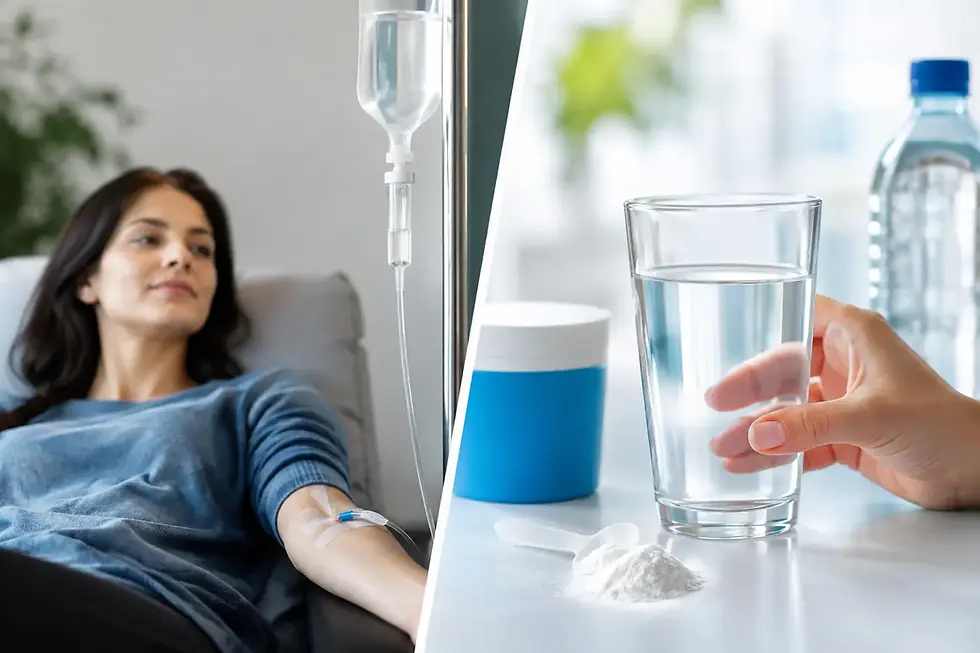
For urgent but non-life-threatening problems, an at-home visit can be an excellent option. Examples include traveler’s diarrhea, dehydration, urinary symptoms, sore throat, sinus pain, minor injuries, skin infections, migraines, medication questions, and hangover-related nausea. Depending on the clinical assessment, the doctor may recommend testing, prescribe medication, provide IV therapy, or arrange a higher level of care.
The right choice depends on severity, timing, location, and what services you may need after the examination. If you need imaging, advanced procedures, or continuous monitoring, an in-office visit or hospital evaluation may be more appropriate. Good care is not defined by keeping every patient at home. It is defined by directing each patient to the safest setting without unnecessary delay.
How to assess a provider before you book
Use reviews as one part of your decision, then confirm practical details directly. Before requesting a visit, make sure you can get clear answers about availability, estimated arrival time, languages spoken, service area, consultation cost, payment method, and what is included in the visit.
Transparency is particularly reassuring when you are sick in an unfamiliar city. You should know whether the stated price covers the medical consultation only or whether laboratory tests, medications, IV therapy, imaging, or travel outside the normal coverage area may involve separate charges. There is nothing wrong with additional costs when they are medically indicated and explained in advance.
Ask how prescriptions work and how you will receive test results. If follow-up is needed, find out whether the clinic can continue supporting you by telehealth, coordinate an in-office appointment, or advise you on the next medical step. A house call should not feel like a one-time transaction with no plan for tomorrow.
At Equilibrium Urgent Care, the goal is to make that process feel clear and calm for international patients. Bilingual care, direct communication, and flexible access to telehealth, in-office care, and at-home visits can reduce the logistical stress that often comes with getting sick abroad.
Signs that a review reflects quality care
The best patient feedback often describes the small moments that make medical care feel trustworthy. The doctor did not rush. The patient was invited to ask questions. The treatment plan was explained in plain English. The clinician gave realistic guidance rather than making promises that no medical professional can guarantee.
Pay special attention to reviews that mention safety-net instructions. For example, did the provider explain what symptoms would mean the patient should seek emergency care? Did they state when to expect improvement and when to contact the clinic again? This is a mark of thoughtful care, because recovery does not always follow a fixed timeline.
You may also see reviews praising a provider for recommending an in-person assessment or hospital transfer instead of performing a home visit. That should not be treated as poor service. Appropriate referral can be the safest, most professional response when a patient needs resources beyond what can be delivered at home.
A home visit should make care feel simpler, not uncertain
At-home medical care is about more than convenience. When you are nauseated, in pain, caring for a sick child, or simply too anxious to navigate a foreign healthcare system alone, being seen where you are can restore a sense of control. The right provider brings medical expertise along with clear communication and a plan you can follow.
Read reviews carefully, but let your own symptoms guide the urgency of your decision. Choose a service that answers questions directly, explains costs before treatment when possible, and treats your comfort and safety as equally important. When you are far from home, that kind of clarity is often the care you need most.


Comentarios